Field guide / 01
Start with the building and its setting
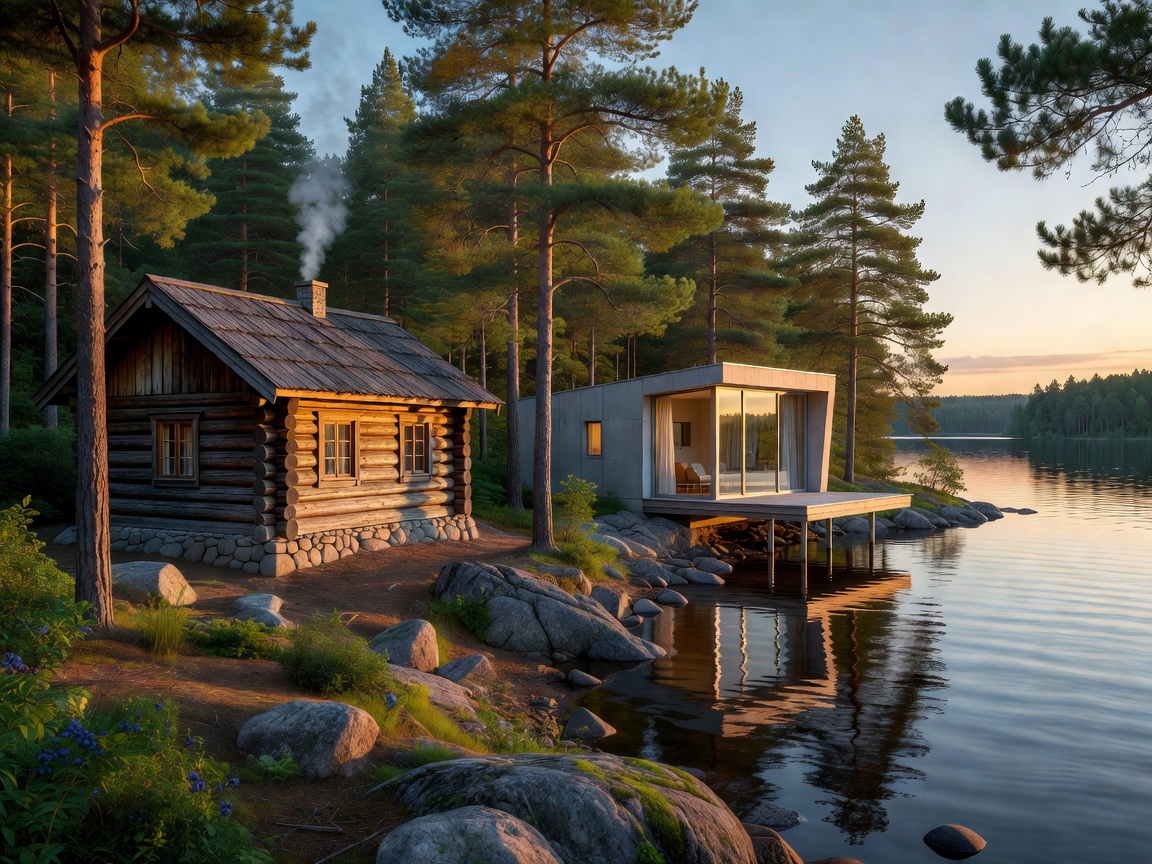
A traditional wooden cabin often has a compact plan, timber walls and a close relationship with the outdoors. Some are renovated; others keep a deliberately basic arrangement. Expect character, but confirm insulation, indoor plumbing, kitchen equipment and bathroom location. “Traditional” does not tell you the condition or level of service.
Modern cabins may offer larger windows, a more connected kitchen and bathroom, improved insulation or easier controls. These features can make a longer stay simpler. They do not guarantee a private shoreline, a working sauna or a particular view. Read the property description carefully and ask for a floor plan when sleeping arrangements matter.
Match the format to the group
Compact cabins suit a small party that needs a bed, cooking area and straightforward shelter. The trade-off is limited storage and less separation between sleeping and living space. A family-oriented cabin usually has more beds, a larger common area and possibly a separate sleeping annex. Check whether beds are fixed, whether a loft ladder is involved, and whether guests must bring linen.
Remote forest cabins add distance from neighbours and services. That can mean a longer final drive, fewer nearby shops and less dependable mobile coverage. Confirm how you reach the property in the season you intend to travel. A cabin close to a town may simplify groceries and access, but surroundings can be less secluded.
Shoreline and sauna details
“Lakeside” can mean direct access to the water, a path across the plot, a shared shore or a view from a distance. Ask whether the swimming place is private or shared, how the bank is shaped, and whether steps, a dock or a natural entry are present. A sloping, rocky or soft shoreline affects ease of entry. Do not assume that a photographed waterfront is safe for every swimmer.
A private sauna may sit inside the main building, in a separate lakeside structure or outdoors. Indoor facilities are convenient in cold or wet weather. A separate sauna can keep heat and humidity away from living areas, but involves a walk between buildings. Confirm the heater type, fuel, water supply, lighting and instructions. Wood-heated systems need preparation and careful operation; electric systems need the property’s control guidance.
Facilities: basic, equipped or premium
Basic facilities may mean simple cooking equipment, a wood stove, an outdoor toilet or water carried from a well. A more fully equipped cabin may provide an indoor bathroom, refrigerator, dishwasher, electric heating and supplied linen. These are broad categories, not a standard rating system. Inventory differs from property to property.
Cooking arrangements deserve attention. Check for a working hob, oven or microwave, cookware, drinking-water guidance and refrigeration. If the cabin uses a fireplace or wood stove, establish what fuel is provided and how to use the appliance. Heating may be electric, wood-fired, a heat pump or a combination. Ask how the cabin is warmed before arrival in cold weather and what the guest is expected to operate.
Sleeping, access and total cost factors
Count actual sleeping spaces rather than relying on a maximum guest figure. Bunk beds, sofa beds, loft mattresses and separate outbuildings are not interchangeable for every group. Ask about stairs, thresholds, narrow doorways, bathroom access and the distance from parking to the entrance. A traditional property may not be accessible to someone who needs step-free routes. Request specific measurements or photos when access is important.
Rates are not comparable without checking what is included. Budget categories, season, location, cabin size, private sauna, utilities, cleaning arrangements and shoreline access can all affect the overall cost. No single feature guarantees value. Compare the complete arrangement and any required extra supplies before committing.
Good for
A compact cabin works for travellers who pack light and accept fewer conveniences. A modern house can suit guests who prioritise indoor facilities and straightforward routines. A larger family cabin helps groups that need separate sleeping areas. A remote retreat fits people prepared to plan supplies and access in advance.
What to know
- Confirm whether water is potable and available indoors.
- Check linen, towels, firewood and cleaning requirements.
- Ask whether sauna and shoreline facilities are private or shared.
- Review stairs, paths, parking and bathroom access.
- Get the heating and appliance instructions before arrival.
Choose by daily needs: how you sleep, cook, wash, heat the rooms and reach the water. The right details matter more than a broad cabin label.