Field guide / 04
Summer: long evenings and water access
Summer brings long daylight, making it easier to spend time outside late in the day. Cabin plans often include swimming, walking, boating, fishing where permitted and outdoor cooking. Lake access still needs checking: docks may be seasonal, banks can be uneven and water conditions change. Use suitable flotation equipment for boating and follow local rules.
Long daylight does not remove the need for layers or rain protection. Pack insect protection where useful, closed footwear for forest paths and clothing that can dry. Confirm whether outdoor cooking equipment is supplied and allowed. Fire use depends on the property’s rules and current local restrictions; do not assume an open fire is permitted.
Autumn: cooler air and changing daylight
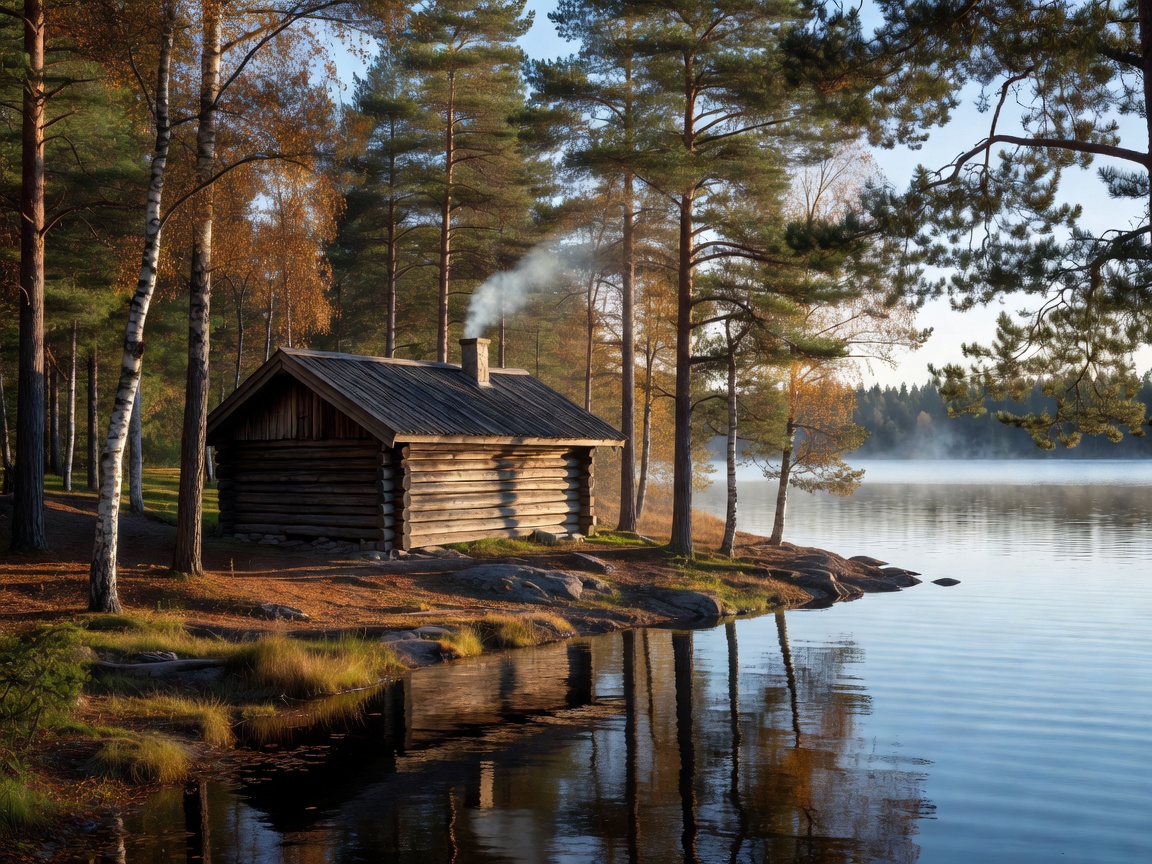
Autumn brings cooler temperatures, changing foliage and a gradual reduction in daylight. The exact timing and colour vary across Finland and from year to year. A quieter setting can suit walking and indoor routines, but wet leaves, rain and dimmer evenings affect paths and driving. Carry a light for outdoor movement and check the cabin’s heating instructions before arrival.
Some seasonal services or outdoor facilities may operate differently outside peak summer. Ask whether a dock, boat, outdoor tap or separate sauna remains available. Plan groceries and travel with daylight in mind, especially if the final approach is unfamiliar. Warm layers, waterproof outerwear and spare socks make a basic packing list more reliable.
Winter: heating, limited light and careful access
Winter can bring snow and frozen conditions, but snow cover is not guaranteed in every location or year. Daylight is shorter, with variation by latitude and date. Ask how the cabin is heated, whether it is warmed before arrival and what guests need to operate. Understand how to use fireplaces, wood stoves or electric systems before relying on them for comfort.
Road and driveway conditions change with weather and maintenance. Confirm parking and access information close to departure; do not assume a small road or driveway is cleared. Suitable footwear, warm layers and a charged light help with short outdoor trips. A frozen lake is not automatically safe to walk or skate on. Ice thickness and stability vary; use only routes confirmed safe by qualified local sources and never treat a photograph as evidence.
Winter sauna can create a strong contrast between warm indoor air and cold surroundings. Keep the route between buildings clear and lit. Avoid sudden cold-water exposure if it is not appropriate for you, and do not enter ice or cold water without a safe, planned arrangement. A warm indoor cooling break is a valid option.
Spring: thaw, soft ground and variable weather
Spring brings returning daylight, but conditions can shift quickly. Snowmelt, wet ground and freeze-thaw cycles can affect driveways, paths and steps. Some smaller roads may be soft or uneven. Ask about access rather than assuming that a route is fully dry because the calendar says spring. Bring shoes that can handle mud and changing temperatures.
Outdoor water systems may be switched off, drained or in the process of reopening. Confirm whether the cabin has running water, how to use it and whether any seasonal facility is available. Daylight increases, but cold mornings and rain remain possible. Use a forecast close to the trip and keep plans flexible.
Compare seasons by practical needs
Summer favours lake activities and long outdoor evenings, while bringing more reliance on outdoor facilities. Autumn can mean cooler, quieter days with less light and changing access. Winter requires a clear heating plan, careful movement and more deliberate transport preparation. Spring offers increasing daylight but may bring unstable ground and variable water arrangements. None is universally easiest.
Good for
Choose summer if lake access and outdoor time are central. Autumn suits visitors comfortable with cooler weather and shorter days. Winter works for travellers prepared to check heat, road access and daylight carefully. Spring suits flexible plans and guests who can adapt to changing ground and facilities.
What to know
- Confirm that the sauna, dock and outdoor water are seasonally available.
- Check current forecasts and access information before travel.
- Ask about heating startup and fuel arrangements.
- Pack layers, suitable footwear and a reliable light.
- Never assume snow cover, safe ice or open-fire permission.
Season changes the work as much as the scenery. Match equipment and expectations to the actual location and current conditions.